Mobile MRI / CT Scan
Back to Specialist Services
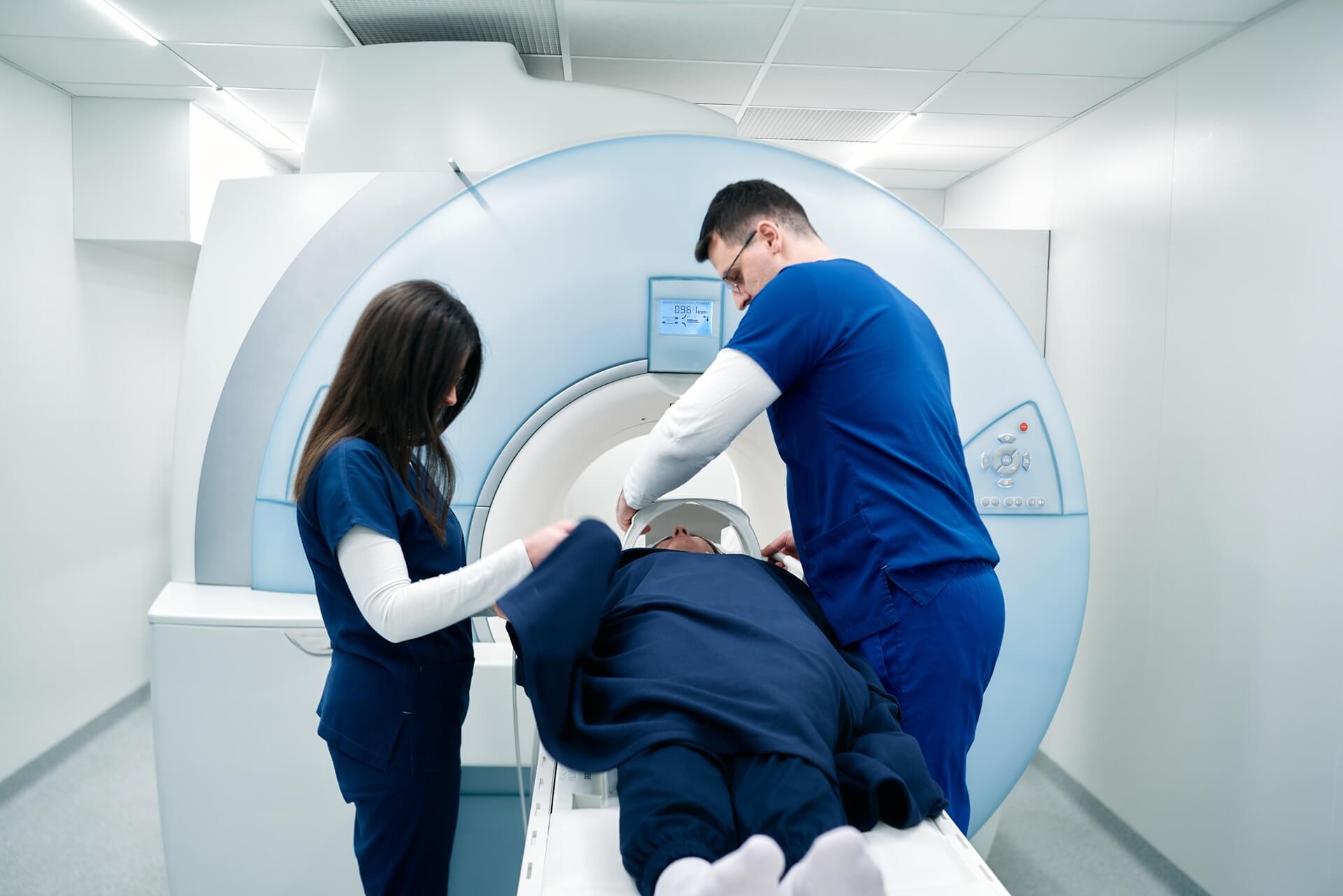
We are proud to offer advanced Mobile CT and MRI services, bringing state-of-the-art diagnostic imaging directly to your location. Our mobile units are designed to provide high-quality imaging solutions, ensuring that patients receive the care they need with the utmost convenience and efficiency.
Whether it’s a hospital, clinic, or community health centre, our mobile services are tailored to meet the demands of various healthcare settings, offering a flexible and accessible approach to medical imaging.
What are CT & MRI Scans?
CT Scans (Computed Tomography) use X-rays and computer processing to create detailed cross-sectional images of the body. They are commonly used to diagnose conditions such as fractures, tumors, infections, and internal bleeding.
MRI Scans (Magnetic Resonance Imaging) use strong magnetic fields and radio waves to produce detailed images of soft tissues, such as the brain, muscles, and joints. They are often used to diagnose conditions like brain disorders, spinal cord injuries, and joint abnormalities.

What to expect?
Convenience and Accessibility
- On-Site Services
Mobile CT and MRI units bring advanced imaging technology directly to healthcare facilities, clinics, or even workplaces, providing easy access for patients. - Flexible Scheduling
These units offer flexible scheduling options, often reducing wait times for diagnostic imaging appointments.
Advanced Imaging Technology
- High-Quality Equipment
Mobile units are equipped with state-of-the-art CT and MRI machines that provide high-resolution images for accurate diagnosis. - Comprehensive Imaging Services
They offer a wide range of imaging services, including brain, spine, joint, abdominal, and vascular scans.
Professional Staffing
- Experienced Technicians
Certified radiologic technologists operate the mobile units, ensuring high standards of care and image quality. - Radiologist Interpretation
Images are interpreted by certified radiologists, who provide detailed reports to the referring clinicians.
Patient Experience
- Comfort and Safety
Mobile units are designed to provide a comfortable and safe environment for patients during their imaging procedures. - Efficient Workflow
The streamlined process minimizes the time patients spend in the unit, making the experience as efficient and stress-free as possible.
Diagnostic Accuracy
- Precise Imaging
High-quality images allow for precise diagnosis and assessment of various conditions, aiding in effective treatment planning.
What are the benefits?
- Increased Accessibility both for patients and clinicians
- Reduced Wait Times because of efficient Scheduling
- Cost-Effective Solution by lowering Operational Costs and Flexible Deployment
- High-Quality Imaging with advanced technology and expert interpretation
- Enhanced Patient Care by provision of Immediate Access and Comprehensive Services
- Provide Emergency and Specialized Services as required
- Compatibility with NHS systems
Our Mobile CT and MRI units offer a flexible, convenient, and high-quality solution for diagnostic imaging, enhancing accessibility, reducing wait times, and supporting comprehensive patient care across diverse healthcare settings.
What is it used for?
CT scans are used to diagnose fractures, internal injuries, tumors, and infections, and to guide surgical procedures.
MRI scans are essential for detecting neurological disorders, spinal issues, musculoskeletal problems, and evaluating soft tissues like organs.
Both types of scans provide crucial information for accurate diagnosis and treatment planning.

Thrive Health Hubs operate a variety of clinics across the borough, offering both NHS and private healthcare services.
Frequently asked questions
Get answers to common questions that patients have
What is a CT scan?
A CT (Computed Tomography) scan uses X-rays and computer processing to create detailed cross-sectional images of the body, helping diagnose fractures, tumors, and internal injuries.
What is an MRI scan?
An MRI (Magnetic Resonance Imaging) scan uses strong magnetic fields and radio waves to produce detailed images of soft tissues, such as the brain, muscles, and joints, useful for detecting neurological disorders and musculoskeletal problems.
Are they safe?
CT scans are generally safe, but they do involve exposure to a small amount of ionizing radiation. The benefits usually outweigh the risks, especially when used to diagnose serious conditions.
MRI scans are very safe as they do not use ionizing radiation. However, they are not recommended for patients with certain implants or metal objects in their bodies.
Need more help? Please chat to our friendly team.